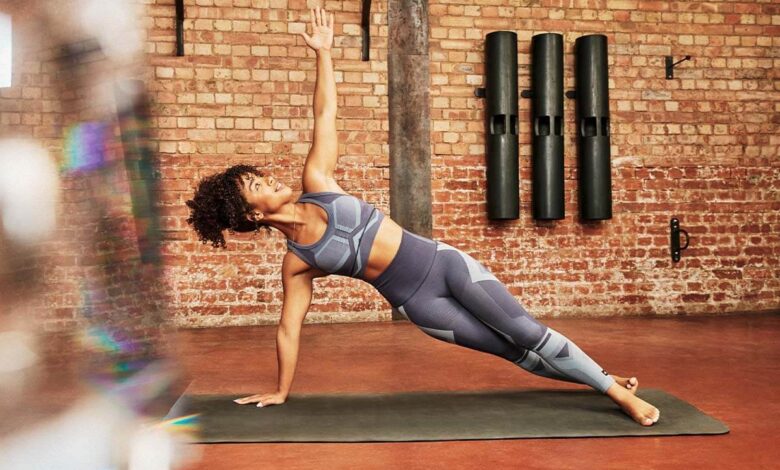
Have you ever seen someone who seems pretty normal in terms of athletic performance and then does it do everything right? He runs fast for long distances, winds down a HIIT workout, flies across a basketball court or soccer field… He obviously has a good basic workout. And if he is an athlete who touches all the sticks, he has probably seriously trained his core.
Why is it so important core?
The trunk muscles stabilize and support the trunk, also known as the torso. Anatomically, it is made up of the thorax, chest, abdomen, back, and pelvis. Many small muscles, both superficial and deep, run through this central part of the body. Not to be redundant, but the core it refers to the “centre” because it is the center of all movements. It keeps your body upright when you walk or sit, and reduces pressure on your back muscles, spine, and other ligaments. Core activation allows your glutes and leg muscles to function properly, and the same goes for your upper body. Do you like to play softball, tennis, golf, or soccer? pickleball? You are able to do the turns, and even regain your balance when you lose it, thanks in large part to a core optimum.
Also, a core weak is sometimes one of the reasons why there are people with a tendency to suffer from lower back problems. So when you go to the doctor for a back injury, he or she might tell you to fix the immediate problem and, for long-term care, go to the gym to train your back. core focusing on protecting your back. For athletes, regardless of whether they want to improve strength, endurance, or a mix of both, a core weak typically results in reduced performance. Do we have any surfers around here? A strength training program core eight weeks can help pro surfers improve their performance, several Southern California researchers say (of course).
Other advantages of having a strong midsection:
You will run faster: A strong core improves the interaction between the pelvis, hips and lower back, which benefits runners.
You will increase the strength of the arms and legs: the abdomen is connected to the extremities and acts to transmit power.
You will achieve more flexibility: the stronger the entire trunk musculature, the less pressure will be on the tendons, joints and ligaments, especially in the lower part of the body. Consequently, your movements are more fluid and you have more flexibility.
You will be more agile as you age: the muscles of the core they are largely responsible for your balance and coordination skills. Both abilities deteriorate with age. If you start training core soon, later you will be able to move and act more independently.
It is also very practical to be able to take a bag of dirt for the cat’s litter box or a very full suitcase out of the trunk, and these movements depend on a core strong. (Don’t forget to use your legs when you do this!)
Your body is more than just muscles. Find out what you need here!
How to train the core
Its interconnectedness with the rest of the body means that whatever movements you make, you’ll probably also be training the core. Even exercises that focus on arm strength always involve parts of the upper arm muscles as well. core. To strengthen all parts evenly and strategically, you must follow four principles:
Alternate between static exercises, such as planks, and dynamic exercises: you can do squats, sit-ups, or star jumps.
Combine exercises that cover all three planes of movement: sagittal (which divides the body longitudinally from the top of the skull to the feet), transverse (which divides the body between upper and lower parts with the waist as the midpoint), and frontal ( front vs. back). For example, a good combination would be crunches, Russian twists, and side plank crunches.
7 exercises to do at home
You can do them at the gym or at home, as long as you have some basic equipment. It will be enough to have some dumbbells, a weight plate or a sandbag. Combine them to make a workout of the core of 12 minutes. Do the first six movements for 30 seconds, resting as little as possible between them. The seventh movement do it slowly; take up to 1 minute for it and use the remaining time to rest. Repeat it twice.
- One arm plank
Start with a high plank, with your hands below your shoulders and a straight line between your heels and your head. Without letting his hips rotate, he raises his left arm and points his fingers forward and up; he switches arms to do the other side. The higher the hand is, the more the muscles of the hand are activated. core.
Start with a low plank, with your forearms on the ground and a straight line between heels and head. Activate the core and glutes, and move your feet up and out; then bring them to the center again. Keep jumping like this without raising your hips.
- front star jumps
Start standing, feet more than hip-width apart, arms out to the sides, palms facing forward; Bring your legs and palms together at the same time, keeping your arms and legs straight, and return to the starting position. Keep jumping fast.
- Standing Bicycle Crunches
Start standing with feet hip-width apart, elbows up, fingertips near temples, palms facing out. Lower into a squat, stand up, and bring your left knee up and to the right, and your right elbow down and to the left, so that your left knee and right elbow touch. Return to the starting position, lower into a squat, twist, and do the same on the opposite side. Continue squatting down and coming up alternating sides.
Stand with your feet hip-width apart. In a fluid motion, lift your right foot and, keeping your left foot straight, move your right foot away and lower into a squat on your right leg, knee following the ball of your right foot and hands loose and together in front of your body. , as a counterweight. Return to the starting position and repeat on the left side.
Start with your feet hip-width apart and place your hands on your hips. He steps his left foot forward to take a lunge, with his left knee following the ball of his left foot, gently touches the ground with his right knee, and then presses his left foot forward and steps his right foot forward. He repeats on the right side. If you find it too difficult, try standing reverse lunges or standing lunges with a cushion under your knees. If it’s too easy for you, do lunges with a weight plate overhead.
- Single Leg Deadlift
Start with your feet hip-width apart, with a dumbbell in each hand. keeping the core activated, shoulder blades together and down, shift weight to left foot; lift your right foot and lean your torso forward as you extend your right leg behind you, until your leg and torso are nearly horizontal. Reverse the process to continue. Do 3-4 reps on your left foot before switching sides.

