If you are a woman over 40 and your midsection seems to be changing even though your habits have not changed very much, you are not imagining it.
Maybe you are eating healthy foods. Maybe you are exercising consistently. Maybe the number on the scale has barely moved, yet your clothes fit differently and more of your body fat seems to be settling around your waist.
This is one of the most common frustrations I hear from women during perimenopause and menopause.
Here is what I want you to know. You do not have to choose between losing belly fat and keeping your muscle. In fact, protecting and building muscle should be one of the most important parts of your fat loss plan after 40.
The goal is not simply to become smaller. The goal is to reduce excess body fat while becoming stronger, healthier, and more capable.
The Quick Answer
You cannot choose exactly where your body loses fat first, and abdominal exercises alone will not remove menopause belly fat. You can, however, reduce total and abdominal body fat while protecting muscle through a personalized combination of strength training, appropriate nutrition, adequate protein, cardiovascular activity, recovery, and consistent coaching.
The right plan should create enough structure to support fat loss without using extreme restriction that leaves you exhausted, hungry, and at greater risk of losing muscle.
What Is Menopause Belly Fat?
The phrase menopause belly is not a medical diagnosis. It is a common way women describe the increase or redistribution of body fat around the abdomen that can happen during perimenopause and menopause.
There are two main types of abdominal fat.
- Subcutaneous fat is the fat directly beneath the skin that you can pinch.
- Visceral fat is stored deeper in the abdomen around the internal organs.
Visceral fat is especially important to address because higher levels are associated with increased health risks. This is about much more than how your jeans fit.
It is also important to distinguish body fat from bloating or abdominal swelling. If you experience new or persistent swelling, pain, digestive changes, or other concerning symptoms, speak with your healthcare provider instead of assuming menopause is the cause.
Why Belly Fat Often Increases During Menopause
Menopause does not automatically cause every woman to gain weight, but it can change where the body is more likely to store fat.
The Menopause Society explains that menopause plays an important role in redistributing fat toward the abdomen. Declining estrogen, age related muscle loss, lower activity, changing eating habits, stress, sleep disruption, and hot flashes can all contribute.
Estrogen changes how fat is distributed
As estrogen declines, the body may store a greater percentage of fat around the waist instead of the hips and thighs. That means a woman can notice a larger waist even when the scale has not increased dramatically.
Muscle naturally becomes harder to maintain
The Menopause Society reports that women may naturally lose approximately 3 to 8 percent of their muscle mass per decade after age 30. Losing muscle can reduce strength and lower the amount of energy the body uses at rest.
This is why a plan focused only on eating less and watching the scale can miss the larger issue. If you lose weight but also lose a meaningful amount of muscle, you may end up lighter without becoming stronger or improving your body composition in the way you hoped.
Sleep and stress affect consistency
Hot flashes, night sweats, anxiety, caregiving demands, work stress, and changing sleep patterns can influence hunger, energy, recovery, and the ability to stay consistent.
This does not mean stress has magically stopped fat loss. It means that stress and poor sleep can influence the behaviors and recovery that make a sustainable plan easier or harder to follow.
Why More Cardio and Less Food Is Not Always the Answer
When belly fat will not move, many women respond by cutting food harder and adding more cardio.
That approach may produce a quick change on the scale, but it can also make the plan difficult to sustain. If the nutrition target is too aggressive, training quality can suffer, hunger can increase, recovery can decline, and lean tissue may become harder to protect.
Cardio is valuable for heart health, fitness, and energy expenditure. It simply should not replace strength training or become punishment for eating.
The most effective approach is usually a combination of customized nutrition, progressive strength training, appropriate cardio, and daily movement.
How to Lose Menopause Belly Fat Without Losing Muscle
1. Make strength training the foundation
Strength training gives your body a reason to retain and build muscle while you are losing fat.
A large systematic review found that resistance based exercise can reduce body fat and visceral fat while increasing or preserving lean mass. The American College of Sports Medicine also emphasizes that training all major muscle groups at least twice each week matters more than chasing a complicated or perfect routine.
Your plan may use dumbbells, machines, resistance bands, barbells, or body weight exercises. The exact tools matter less than using proper form, training consistently, and gradually increasing the challenge as your body adapts.
For many women, two to four focused strength sessions each week can be effective. The right number depends on your experience, schedule, recovery, medical history, and goals.
2. Use a nutrition target that supports fat loss without starvation
Fat loss requires an appropriate energy deficit, but that deficit does not need to be extreme.
Your calorie and macronutrient needs depend on your current body, activity level, training schedule, health history, food preferences, and goal. A generic calorie calculator cannot understand all of those factors.
A customized plan should give you enough structure to make progress while still providing the energy and nutrients required to train, recover, and live your life.
Progress will not always be perfectly linear. Some weeks the scale may hold steady while measurements, strength, energy, or how your clothes fit improve. This is why I look at the full picture instead of allowing one number to decide whether your plan is working.
3. Eat enough protein throughout the day
Protein supplies amino acids that help maintain and repair muscle. It also supports fullness, which can make a nutrition plan easier to follow.
The Menopause Society recommends approximately 1.2 grams of protein per kilogram of body weight per day as a general target for women in midlife. Individual needs can vary, especially for women who are actively strength training, losing weight, using a GLP 1 medication, or managing a medical condition.
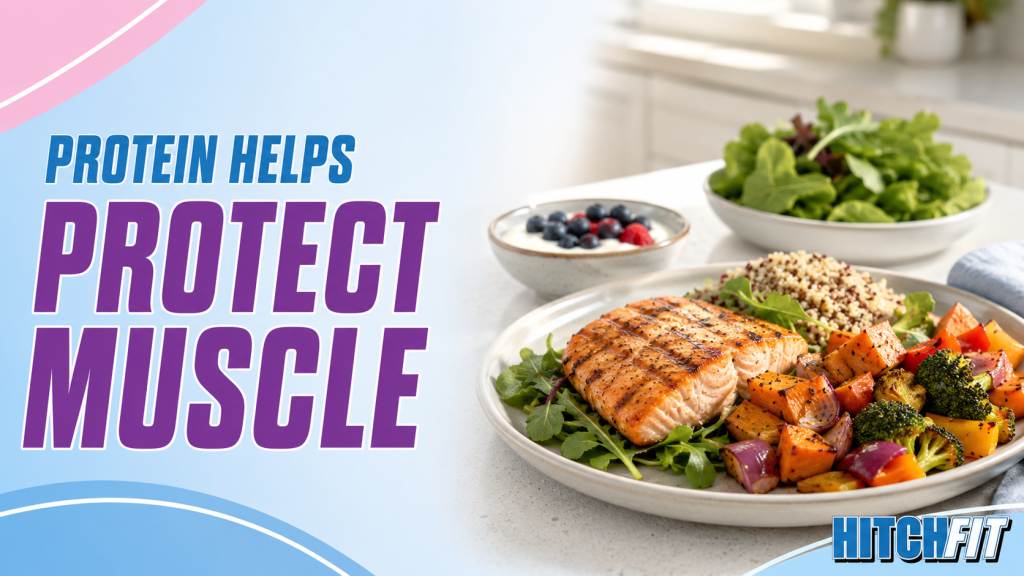
Instead of saving nearly all your protein for dinner, spread it across your meals. Eggs, poultry, fish, lean meat, Greek yogurt, cottage cheese, tofu, tempeh, beans, lentils, and protein powder can all contribute.
For a deeper explanation, read The Importance of Protein for Women Over 40.
If you have kidney disease or another condition that affects protein recommendations, speak with your healthcare provider before substantially changing your intake.
4. Do not remove every carbohydrate or dietary fat
Carbohydrates can support training performance, recovery, and an active lifestyle. Dietary fats provide essential nutrients and help make meals satisfying.
The amount and timing should be customized, but neither nutrient needs to be treated as the enemy.
What matters is building meals that fit your goals and that you can continue eating beyond a short challenge. That may include lean protein, vegetables and fruit, quality carbohydrates, and appropriate portions of healthy fats.
The best nutrition plan is not the one that looks the most impressive on paper. It is the one that produces progress and fits your real life well enough to become consistent.
5. Use cardio strategically and increase daily movement
You do not have to spend hours on a treadmill to lose menopause belly fat.
Walking, cycling, swimming, hiking, and other cardiovascular exercise can complement your strength work. Daily steps also matter because they increase movement without always adding another demanding workout.
The Menopause Society recommends at least 150 minutes of moderate aerobic activity each week along with strength training at least twice weekly as a general health target.
Your personal starting point may be different. A beginner may need less at first, while an experienced woman may safely do more. The goal is to select an amount that helps you progress without interfering with recovery or making the plan feel impossible to maintain.
6. Protect your sleep and recovery
Your body adapts to training while you recover from it.
Poor sleep can leave you with less energy to exercise, more difficulty managing hunger, and less patience for meal preparation. Instead of seeing sleep as separate from your fitness plan, treat it as part of the plan.
Create a consistent evening routine when possible. Keep the room cool if hot flashes or night sweats disturb sleep. Discuss significant sleep problems or menopause symptoms with your healthcare provider.
You do not need a perfect night of sleep before you can make progress. You do need a plan that acknowledges your current reality.
7. Measure more than your body weight
The scale is one source of information, not the entire definition of success.
Track waist and hip measurements, progress photos, how your clothes fit, workout performance, energy, sleep, and consistency. If you are gaining muscle while losing fat, the physical transformation may be more noticeable than the change in scale weight.
This is body recomposition. You are not simply trying to occupy less space. You are working toward a stronger ratio of lean tissue to body fat.
When the Real Sticking Point Is a Repeating Pattern
Many women already know they should eat well and exercise. More information is not always what they are missing.
Sometimes the struggle is a repeating loop.
You follow the plan perfectly for several days. A stressful moment disrupts your routine. One meal that was not planned turns into shame. Shame turns into all-or-nothing thinking. You decide the week is ruined and promise to start again on Monday.
That loop is not proof that you are lazy or incapable. It is a pattern that deserves to be noticed with honesty and compassion.
As a certified Trauma and Resilience Life Coach, I help women explore where stress, past experiences, emotional eating, self protection, or old beliefs may be influencing their present choices. This is not therapy, and it does not replace mental health or medical care. It is an added layer of awareness that helps us address the person following the plan, not just the numbers printed on it.
You can learn more in Why Your Nervous System Matters for Fat Loss After 40.
Can This Work if You Use HRT or a GLP 1 Medication?
Yes. I work with women regardless of whether they use hormone therapy or a GLP 1 medication under the care of a qualified medical provider.
Hormone therapy is not a direct weight loss treatment. The Menopause Society notes that it may help manage symptoms such as hot flashes, sleep disturbances, and mood changes, which can make healthy lifestyle changes more manageable.
If your healthcare provider has prescribed a GLP 1 medication, your personalized fitness and nutrition plan can be built around that reality. Strength training, adequate nutrition, recovery, and learning sustainable habits still matter, especially when a lower appetite makes it harder to consume enough protein and other nutrients.
I do not prescribe, change, or manage medication. That remains between you and your healthcare provider. My role is to help you apply an appropriate fitness and nutrition strategy alongside your medical care.
You also do not need to use HRT or a GLP 1 to make progress. Your plan should be based on your body, choices, medical guidance, and goals.
Why Real Human Coaching Matters After 40
An app or AI tool can generate numbers. It cannot know your full story, watch how your body is responding over time, or recognize the moment when your plan needs to be adjusted.
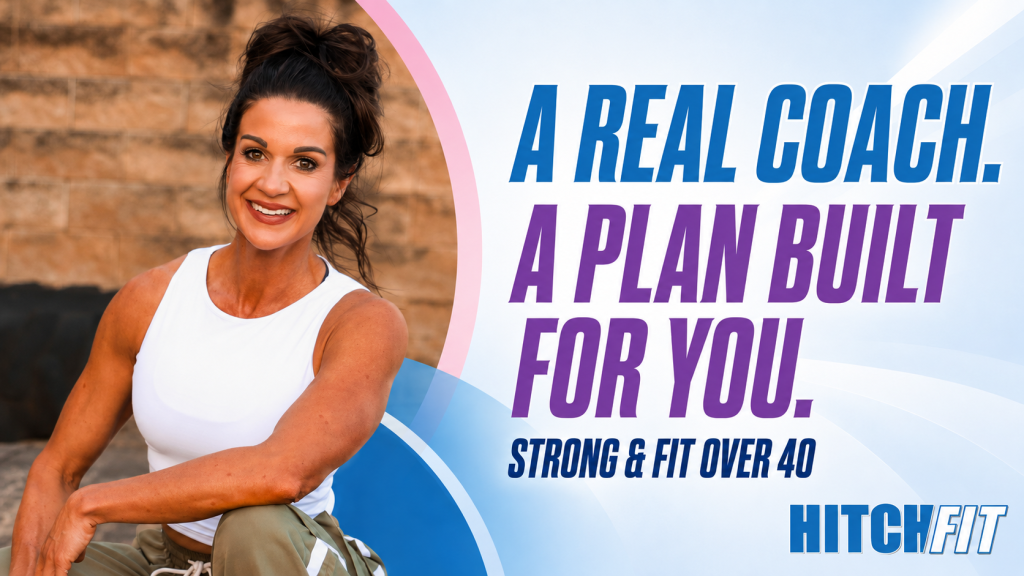
When you choose my Strong and Fit Over 40 customized online plan, I personally review your information and create your nutrition and training program.
You communicate directly with me through my personal email. I review your progress, answer questions, help you navigate sticking points, and adjust the guidance when your needs change.
You are not handed an automated template and left alone to figure it out.
Your customized plan can account for your experience level, schedule, home or gym access, food preferences, HRT or GLP 1 use, injuries or limitations cleared for exercise, and the patterns that have made consistency difficult in the past.
The plan matters, but so does having a real person paying attention to how the plan is working for you.
Frequently Asked Questions
Can menopause belly fat go away?
Yes, women can reduce abdominal fat during and after menopause. You cannot select the exact area where fat leaves first, but consistent nutrition, strength training, cardiovascular activity, daily movement, sleep support, and stress management can improve overall and abdominal body fat.
Can I lose belly fat without losing muscle?
Yes. The best strategy combines an appropriate nutrition target with regular strength training and adequate protein. Extreme restriction and weight loss without resistance training may make lean tissue harder to protect.
Will abdominal exercises remove menopause belly fat?
Abdominal exercises strengthen the muscles of your core, but they do not selectively burn the fat covering those muscles. Total fat loss and improved body composition require a broader nutrition and exercise plan.
How much protein should a woman over 40 eat?
The Menopause Society recommends approximately 1.2 grams per kilogram of body weight daily as a general midlife target. Your ideal intake may differ based on body size, training, calorie intake, health history, and goals. In general I suggest eating about 1 gram of protein per ideal pound of body weight.
Is cardio or strength training better for menopause belly fat?
Both can help, but strength training is especially important for preserving and building muscle. A customized combination of strength training, cardio, and daily movement is usually more useful than relying on one form of exercise alone.
Does HRT get rid of menopause belly fat?
Hormone therapy is not a direct weight loss treatment. It may improve symptoms such as hot flashes and disrupted sleep for appropriate candidates, which can make healthy habits easier to maintain. Decisions about hormone therapy should be made with a qualified healthcare provider.
Can I follow Strong and Fit Over 40 while using a GLP 1?
Yes. If a healthcare provider has prescribed a GLP 1 medication, your fitness and nutrition plan can be personalized around your current appetite, training needs, goals, and medical guidance. Medication management remains with your prescriber.
You Are Not Stuck With the Same Pattern Forever
Your body may respond differently now than it did in your twenties or thirties. That does not mean transformation is no longer possible.
It means your approach needs to match the woman you are today.
If you are ready to lose body fat, protect your muscle, build strength, and finally receive guidance that accounts for your body and your story, I would be honored to coach you.
Learn more about Strong and Fit Over 40 and choose your customized plan.
Your plan will be created and reviewed by me, not generated by a robot. You will have a real coach walking with you through the questions, adjustments, and sticking points that are part of lasting transformation.
About Diana Chaloux LaCerte
Diana Chaloux LaCerte is the cofounder of Hitch Fit, founder of SoulSTRONG, a certified Menopause Coach, and a certified Trauma and Resilience Life Coach. For more than 20 years, she has helped women transform their bodies and lives through customized fitness, nutrition, mindset, and direct personal coaching.
Medical Disclaimer
This article provides general fitness and educational information. It is not medical advice and does not diagnose or treat any condition. Consult a qualified healthcare professional regarding menopause symptoms, medication, hormone therapy, GLP 1 use, unexpected abdominal changes, or changes to exercise and nutrition when you have a medical condition.
Sources

