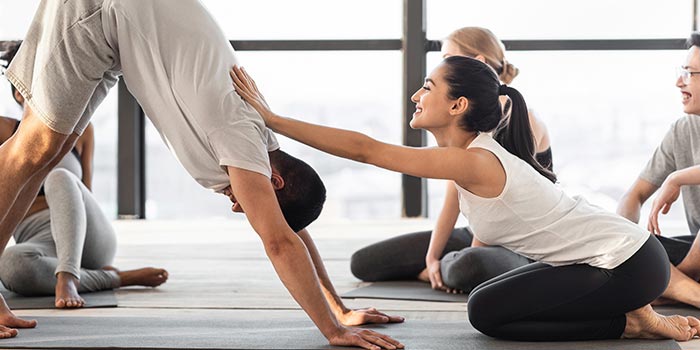
The hatha-yoga It is a practice that helps balance the body, mind and spirit. It is a concept that encompasses all types of physical yoga practice, including postures, breathing exercises, and meditation. Thus, the main objective of hatha yoga is to cause a positive change in ourselves through strength and relaxation. If you want to know the benefits it can bring you and how to practice it, stay. In addition, if you want to dedicate yourself to it professionally, the Yoga Instructor + Children’s Yoga Instructor course will provide you with the necessary knowledge and techniques. Follow us!
The principles that govern Hatha Yoga
According to Eastern philosophy, the individual is linked to the universe. With the yoga it seeks to make the person aware of this union through postures. These, combined with mindful breathing, lead to a meditative state.
In general, yoga is a discipline that has a single goal, but several paths can be taken to reach it. These paths refer to the five currents or branches that exist. In each of them, a specific aspect of ourselves is worked on.
In the case of Hatha Yoga, which is the most practiced in the West, the body is worked through postures (asanas), breathing exercises (pranayama), gestures (mudras), etc. With this, it is possible to align the body through strength and balance. In addition, relaxation techniques are learned. In short, its practice seeks to purify the body and achieve a state of full consciousness.
On the other hand, the rest of the types of yoga that we find are: Raja Yoga, which focuses on the mind; Bhakti Yoga, based on love for humanity and nature; Jñana Yoga, which works knowledge through meditation; and Kharma Yoga, recommended for active people.
Benefits of practicing Hatha Yoga
This type of yoga can be practiced by both adults and children. According to its followers, the physical and psychological benefits it brings are:
- Body strengthening. It contributes to the proper functioning of the muscles of the whole body, making them stronger and more agile after a few months of practicing it.
- Posture correction. Asanas help keep the spine flexible and correct poor posture, as well as strengthen the back muscles.
- Release of tension and improvement of mood. Breathing helps to release tension, relieving stress, relaxing the mind and leading to a state of calm.
- Improved flexibility. It increases the flexibility of our muscles and the mobility of the joints.
- Impulse control. It helps keep your mind focused, making it easier to control cravings.
Yoga poses for beginners
The postures that are practiced in hatha yoga can be gentle and intense. If you plan to start doing yoga at home and you don’t know where to start, here we explain some simple ones.
Lotus position or Padmasana
This posture is used to start all yoga classes. You have to sit with your back straight, your legs crossed and your hands up and resting on your knees. Try to keep your mind relaxed. With this you will create an ideal physical state to learn to breathe and meditate.
Rabbit Pose or Sasangasana
Kneel down with your body leaning towards the ground. The head must touch the mat and in turn the knees. Then, stretch your arms behind you with your hands intertwined. This posture serves to stretch all the muscles and bones of the back, in addition to gaining elasticity and mobility throughout the spine.
donkey kick stance
Get on all fours, lift one leg and stretch it back. At the same time, she raises and stretches the opposite arm. The body should form a straight line. You will see how you work the whole body, especially the core part, and improve your balance.

