Echinacea is one of those herbal remedies I tend to buy when the colder months approach. Having spent several Christmases with a cold, I started taking A.Vogel echinacea drops before winter in the hope of avoiding another one.
But does taking echinacea before you get ill actually make a difference? And is it worth taking once a cold has already started?
Echinacea has a fascinating history, with its medicinal use dating back long before it became a popular herbal remedy in Europe. It’s also been the subject of numerous clinical studies, although not all of them have reached the same conclusions.
As someone who regularly uses echinacea, I was curious to find out how much of its reputation is actually backed by science.
Echinacea for colds: Key takeaways
- Taking echinacea regularly may slightly reduce your chances of catching a cold, although it’s no guarantee that you won’t get ill.
- If you already have a cold, certain echinacea preparations may help relieve symptoms, but there’s no convincing evidence that they reliably speed up recovery.
- There is also some evidence that echinacea may help reduce other respiratory infections, but more research is needed.
- Not all echinacea products are the same. The type of echinacea, the parts of the plant used and how the extract is made may all make a difference.
- Echinacea isn’t suitable for everyone, particularly people with certain allergies or health conditions.
What is echinacea and how was it traditionally used?
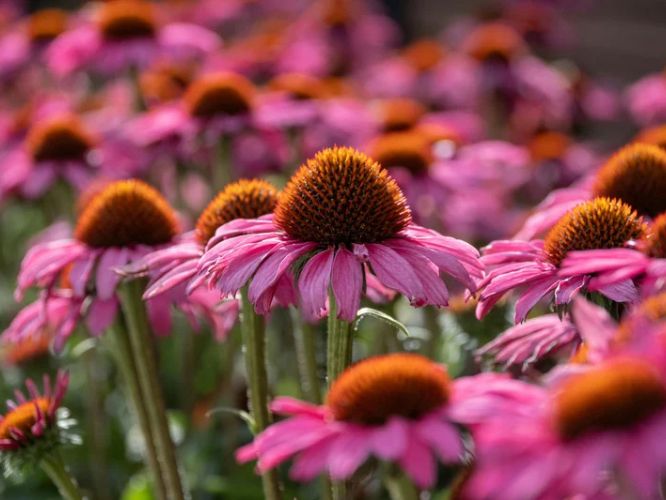
Echinacea, also known as coneflower, is a flowering plant native to North America. It belongs to the daisy family and is easily recognised by its pink or purple petals and raised, cone-shaped centre.
Long before echinacea became a popular herbal remedy in Europe, Indigenous peoples in North America were using it to treat various health complaints, including colds, coughs and sore throats.
According to research by ethnobotanist Kelly Kindscher, the Kiowa and Cheyenne peoples would chew echinacea root for colds and sore throats, swallowing the saliva as they did so. Other traditional uses included relieving toothache and treating wounds and insect bites.
Three species of echinacea are commonly used in herbal remedies today:
- Echinacea purpurea (purple coneflower)
- Echinacea angustifolia (narrow-leaved coneflower)
- Echinacea pallida (pale purple coneflower)
Herbal preparations can be made from the roots, flowers and other above-ground parts of these plants. This matters because not all echinacea products necessarily have the same effects.
How Alfred Vogel helped popularise echinacea
Alfred Vogel, a Swiss herbalist with a particular interest in fresh medicinal plants, learnt about echinacea during a visit to South Dakota in the early 1950s. There, he met Ben Black Elk, a member of the Oglala Lakota community, who introduced him to the plant’s medicinal uses.
Black Elk gave Vogel some Echinacea purpurea seeds, which he brought back to Switzerland. He began growing the plants and eventually developed the herbal remedy we know today as Echinaforce.
What I find particularly interesting is that Vogel didn’t just use echinacea when he was ill. According to A.Vogel, he took it daily well into his nineties and reportedly remained free of colds.
While this is one person’s experience rather than scientific proof, it raises an interesting question: can taking echinacea regularly really help us get sick less often?
Can echinacea help prevent colds?
There is some scientific evidence to support taking echinacea regularly to prevent colds, although the benefits may not be as big as you might expect.
How much can echinacea reduce your risk of catching a cold?
A 2014 Cochrane review of 24 clinical trials involving 4,631 participants looked at echinacea for both preventing and treating colds.
Although none of the individual prevention trials showed a statistically significant reduction in the number of people catching a cold, combining their results suggested that some echinacea preparations might reduce the relative risk by around 10–20%.
To put this into perspective, if 50 out of 100 people would normally catch a cold, taking echinacea could potentially reduce that number to 40–45.
More recent research has also found encouraging results:
- A 2019 review found a 22% lower relative risk of developing an upper respiratory tract infection among people taking echinacea.
- A 2024 review of 30 clinical trials involving 5,652 participants found a 25% lower relative risk of developing at least one respiratory infection.
Bear in mind that these two reviews looked at respiratory infections more broadly, not just common colds. The 2024 review was also partly funded by A.Vogel.
What happens when you take echinacea for four months?
A 2012 clinical trial investigated whether taking Echinaforce, an extract of fresh Echinacea purpurea, regularly could help prevent colds.
The study involved 755 adults who normally experienced at least two colds a year. Participants were given either echinacea or a placebo for four months.
Here’s how often they got ill:
| Echinacea group | Placebo group | |
|---|---|---|
| Total number of colds | 149 | 188 |
| Number of repeat cold episodes | 65 | 100 |
| Number of people experiencing repeat colds | 28 | 43 |
While the difference in the total number of colds wasn’t statistically significant, the reduction in repeat cold episodes was.
This is particularly interesting if you tend to catch several colds throughout the winter. However, it doesn’t necessarily mean echinacea works better in people who frequently get ill.
It’s also worth noting that two of the study’s authors were affiliated with A.Vogel, and the results apply to the specific extract used in the trial.
Based on the research so far, taking echinacea regularly may help you catch fewer colds, but the benefits appear to be modest.
Can echinacea help you recover from a cold faster?
Catching a cold while already taking echinacea is slightly different from starting to take it when you notice your first symptoms. Researchers have looked at both situations, with mixed results.
If you catch a cold while already taking echinacea…
In the four-month Echinaforce study mentioned earlier, fewer cold episodes were treated with painkillers in the echinacea group. However, they also increased their dose when symptoms appeared, so we don’t know whether taking echinacea regularly was responsible for this benefit.
The 2014 Cochrane review also found that taking echinacea preventively may lead to slightly milder colds, but there was no consistent evidence of faster recovery.
Does taking echinacea at the first sign of a cold help?
Perhaps you’ve already developed a scratchy throat or started sneezing and are wondering whether it’s too late to take echinacea.
Here’s what some of the studies have found:
| Study | Findings |
|---|---|
| 1999 study | Echinaforce reduced cold symptoms, while a root-only preparation was less effective. |
| 2004 study | A specific echinacea extract (Echinilin) reduced the severity of cold symptoms. |
| 2004 study | No significant improvement in symptoms or recovery time. |
| 2010 study | Colds lasted around half a day less with echinacea, but the difference could have been down to chance. |
Interestingly, even among those who started taking echinacea within 24 hours of their first symptoms, the 2010 study found no clear benefit.
A 2019 review also found no significant reduction in how long respiratory infections lasted.
If you already have a cold, echinacea may help make your symptoms a little more manageable, but don’t count on it to speed up your recovery. There isn’t enough evidence to say that it works particularly well for individual symptoms such as a cough or sore throat, either.
How does echinacea affect your immune system?
Echinacea is often described as an immune-boosting herb, but it doesn’t necessarily make your immune system stronger. Instead, it may help regulate the way your body responds to infections.
Echinacea contains several natural compounds, including alkamides, polysaccharides and caffeic acid derivatives, which are thought to play a role in its medicinal effects.
Laboratory research suggests that certain echinacea extracts may:
- Influence how immune cells respond to infections.
- Make it more difficult for certain viruses to enter our cells.
- Help regulate inflammation, which is responsible for some of the symptoms we experience during a cold.
Interestingly, a 2026 review points out that these effects can vary depending on which part of the plant is used and how the extract is made.
This may partly explain why some echinacea preparations appear to work better than others. However, just because an extract shows promising results in a laboratory doesn’t mean it will have the same effects when we take it as a supplement.
Can echinacea help with more than just colds?
Some research suggests echinacea may also help reduce complications following respiratory infections.
The 2024 review mentioned earlier found that people taking echinacea had:
- A 40% lower relative risk of recurrent respiratory infections.
- A 56% lower relative risk of developing complications, such as sinus or ear infections.
- A 40% lower relative risk of needing antibiotics.
These findings are particularly interesting if you tend to get one infection after another during winter, although more independent research is needed to confirm them.
What about flu? While there have been some promising findings, we don’t yet have enough evidence to say that echinacea can prevent flu or help you recover faster.
And although some studies suggest that taking echinacea may reduce the need for antibiotics, this doesn’t mean it can replace antibiotics when you need them.
Echinacea for children: Does it help prevent colds?
Every autumn and winter, I buy A.Vogel Echinaforce Junior chewable tablets for my son, mainly in the hope of reducing how often he gets ill. These tablets are intended for his age group here in Slovenia.
But what does the research say about their effectiveness?
A 2021 study involving 201 children aged 4–12 compared Echinaforce Junior chewable tablets with vitamin C over four months.
Here’s what the researchers found:
| Echinacea | Vitamin C | |
|---|---|---|
| Children who developed a respiratory infection | 38.8% | 55.1% |
| Average duration of an infection | 5.7 days | 7.1 days |
| Children who developed complications | 9.7% | 20.4% |
| Children who needed antibiotics | 5.8% | 15.3% |
The study was funded by A.Vogel and didn’t include a placebo group, so more independent research would be helpful.
A 2025 review also reported potential benefits for respiratory infections in children, although not all studies have found echinacea effective, and allergic reactions remain a concern.
Age recommendations vary between countries. In the UK, echinacea herbal remedies aren’t recommended for children under 12. Always check the product instructions and speak to your child’s doctor before giving them echinacea.
Which type of echinacea is best for colds?
When choosing an echinacea supplement, there’s more to consider than just the strength or the number of milligrams on the label. The type of echinacea and how it’s prepared may also make a difference.
Does the echinacea species matter?
| Echinacea species | What the research tells us |
|---|---|
| Echinacea purpurea | Widely studied for colds, with some evidence of a preventive benefit. |
| Echinacea angustifolia | Traditionally used for colds, but clinical studies have produced mixed results. |
| Echinacea pallida | Much less research is available, making it difficult to judge its effectiveness. |
Although Echinacea purpurea has more research behind it, we don’t have enough evidence to say it’s more effective than the other two species.
Echinacea root or whole plant?
The roots and above-ground parts of echinacea contain different amounts and types of active compounds, so the part of the plant used may matter.
Interestingly, the 1999 study mentioned earlier found that an extract made from 95% above-ground parts and 5% roots of Echinacea purpurea was more effective at relieving cold symptoms than a particular root-only extract.
This is the same 95:5 combination used in Echinaforce.
What about fresh versus dried echinacea? Alfred Vogel believed fresh plants made better herbal remedies, and some studies using fresh echinacea extracts have produced promising results. However, there isn’t enough research directly comparing fresh and dried preparations to establish which works better.
Echinacea drops, tablets or tea?
I usually opt for echinacea drops for myself, but there are several other ways to take it.
| Form | What to consider |
|---|---|
| Drops and tinctures | Several liquid extracts have been used in clinical trials. Check the concentration and alcohol content. |
| Tablets and capsules | Convenient to take, but may contain either powdered echinacea or a concentrated extract. |
| Chewable tablets | Useful for those who struggle to swallow tablets. Some are specifically formulated for children. |
| Echinacea tea | The amount of active compounds can vary depending on the ingredients and how the tea is prepared. |
There has been some research on echinacea tea, too. A small study published in 2000 reported improvements in cold and flu symptoms using a particular echinacea tea blend.
However, there isn’t enough evidence to say that ordinary echinacea tea offers the same benefits as the extracts used in other clinical trials.
What to look for when buying echinacea
Rather than choosing a product simply because it contains a high dose of echinacea, I’d look for the following information on the label:
- The species: ideally, the full botanical name rather than just ‘echinacea’.
- The plant parts used: root, above-ground parts or a combination of both.
- The type of preparation: powdered plant, liquid extract or dry extract.
- The extract strength: including the extract ratio, where available.
I’d also check whether the manufacturer provides any clinical research on the actual preparation they’re selling.
Personally, I’d rather choose a preparation that’s been studied for colds than one that simply claims to support my immune system.
When and how to take echinacea for colds
Should you take echinacea before you get a cold or when symptoms start?
This depends on what you’re hoping to achieve:
- For cold prevention: Studies showing a benefit generally involved taking echinacea daily for several weeks or months.
- For an existing cold: If you decide to try echinacea, it’s usually recommended to start taking it at the first sign of symptoms.
How much echinacea should you take for a cold?
There is no standard dose of echinacea for colds, as preparations vary in strength and concentration.
For example, adults in the four-month Echinaforce study took:
| Purpose | Daily dose used in the study |
|---|---|
| Cold prevention | 2,400 mg of liquid extract (0.9 ml three times a day) |
| During a cold | 4,000 mg of liquid extract (0.9 ml five times a day) |
Bear in mind that 500 mg of powdered echinacea root isn’t the same as 500 mg of a concentrated extract. Rather than trying to match the doses used in studies, follow the instructions on your chosen product.
How long can you take echinacea, and do you need a break?
Some studies have investigated daily use for up to four months, but recommended durations vary between products and countries.
For example, in the UK, Echinaforce drops should not be taken for more than 10 days. Here in Slovenia, Echinaforce drops are also typically taken for up to 10 days to treat a cold, but the product instructions allow continuous use for up to eight weeks.
There isn’t convincing evidence that taking breaks makes echinacea more effective or prevents your body from getting used to it. However, we still don’t know enough about the safety of taking it all year round.
It’s therefore best to stick to the recommended duration for your particular product.
Echinacea side effects and who should avoid it
Echinacea is generally well tolerated. A 2026 safety review found no significant difference in the overall frequency of side effects between people taking echinacea and those in the comparison groups.
The most common side effects include stomach pain, nausea and other digestive problems. Allergic reactions can also occur and, in rare cases, can be severe.
You should avoid echinacea if you:
- Are allergic to plants in the daisy family, such as ragweed or chrysanthemums.
- Have an autoimmune condition, a weakened immune system or certain blood cell disorders.
- Take medicines that suppress your immune system.
- Are pregnant or breastfeeding, as there isn’t enough evidence to establish its safety.
If you have asthma, eczema or are prone to allergic reactions, check with your doctor before taking echinacea. Some echinacea products specifically advise against use in people with these conditions.
Seek emergency medical help if you develop breathing difficulties or swelling of your lips, tongue or throat after taking echinacea.
Echinacea may also interact with certain medicines, so it’s worth checking with your pharmacist if you take medication regularly.
If you’re buying echinacea in the UK, you may notice a Traditional Herbal Registration (THR) symbol on the packaging. This means the product meets certain safety and quality standards, but its use is based on a history of traditional use rather than proven clinical effectiveness.
So, is echinacea worth taking for colds?
Having looked more closely at the research, I still think echinacea is worth considering, particularly for cold prevention. Even a modest benefit could make a difference if you’re someone who tends to get ill several times over winter.
I tend to buy A.Vogel echinacea products because the company has a long history of working with medicinal plants, and its preparations have been used in several clinical trials. That gives me a little more confidence in what I’m buying, although I’m certainly open to trying other brands.
I don’t expect echinacea to keep me cold-free all winter, and the research hasn’t given me much reason to rely on it for a faster recovery. For me, its potential benefit lies mainly in prevention.
Frequently asked questions
Can echinacea cause diarrhoea?
Yes, diarrhoea is a possible side effect of echinacea. If you develop diarrhoea after taking it, stop taking the supplement. Speak to your doctor if your symptoms persist or are severe.
Does echinacea interact with any medications?
Echinacea may affect how the liver breaks down certain medicines, although research on these interactions has produced mixed results.
There are also concerns that echinacea could interfere with medicines that suppress the immune system, such as ciclosporin, which is used following organ transplants and for certain autoimmune conditions.
If you take prescription medication, check with your pharmacist before using echinacea.
Does echinacea help with a sore throat?
There is little scientific evidence that echinacea specifically helps relieve a sore throat. Drinking warm echinacea tea may soothe your throat, although this could be due to the drink itself rather than the herb.
Can you take echinacea and vitamin C together?
Echinacea and vitamin C can generally be taken together and are often included in the same immune support supplements. However, there isn’t enough research to establish whether taking them together offers greater protection against colds than taking them separately.
Can you take echinacea and zinc together for a cold?
Yes, provided both are suitable for you. Some research has investigated supplements containing echinacea, zinc and vitamin C for respiratory infections, but it’s difficult to establish how much each ingredient contributes to any benefits.
Zinc can also interact with certain medicines, including some antibiotics, so bear this in mind if you’re taking medication.
How quickly does echinacea start working?
There is no established time frame for how quickly echinacea works. If you’re taking it for a cold, you shouldn’t expect immediate symptom relief, and you may not notice any difference at all.
Can you take echinacea on an empty stomach?
This depends on the product. Some manufacturers recommend taking echinacea before meals. However, if it upsets your stomach, taking it with food may help, provided the product instructions allow it.
Is echinacea tea safe during pregnancy?
There isn’t enough research to confirm that echinacea tea is safe during pregnancy. It’s best to avoid it unless your doctor or midwife advises otherwise.