Not long ago a friend and colleague of mine, Mike Perry of Skill of Strength, posted a list (or treatise if you will) on his Facebook page of things to consider when running a fitness business.
It was great.
Mind you, in the age of AI things have gotten a bit more interesting and somewhat complicated. What’s more, it doesn’t help that whenever you peruse social media there are any number of “business coaches” telling you how easy it is to make millions in this industry despite the fact that very few fitness professionals make six figures.
The Bureau of Labor Statistics reports that the highest-earning 10% of fitness trainers and instructors make upwards of $80,740 per year in base wages. The math doesn’t math on TikTok I suppose.
Nonetheless, I have always been a firm believer that BASICS matter first…whether we’re talking actual training or even business advice.
I wanted to share them here with my own thoughts and additions after Mike’s suggestions.
1. You’re not going to get 50 leads a week. If you do, most of them are rubbish. Don’t bother clicking on that sponsored ad.
TG: The selfie video filmed from inside a private jet or with a group of models and a Camaro in the background should be a red flag enough.
The truth of matter is: allowing your business to grow organically via patience, hard work, and word of mouth is almost always going to “win out” over the quick gratification you’ll receive from dolling out a few hundred dollars to some fucktart who doesn’t even own a gym in the first place.
Guess what: When I was at Cressey Sports Performance we didn’t spend one single dollar on advertising or marketing in the first five or so years we were open. Maybe even longer (if at all now that I think about it). Likewise, since being on my own since 2015 I have not had to rely on Google ads or social media marketing in order to gain clients.
Instead here’s what I have always focused on: Greeting people with a smile. being a cool person to hang out with for an hour, and actually getting people results. Oh, and keeping my B.O under control.
Quit looking for the easy fixes, shut up, and do the work.

2. Systems matter. Make it as clear as possible.
TG: There should be as little ambiguity as possible here. When someone reaches out to me asking about training I give them the rundown:
Assessment cost this much. In the assessment we will cover “x,y, and z.” And, to keep things as transparent as possible I even send along my pricing sheet so they’re aware of expected costs should they choose to continue.
Systems will vary depending on size of a facility. I mean, how I go about “systemizing” my way of doing things – as a one-man show – compared to when I was at CSP, tag-teaming responsibilities amongst a larger staff, needs to be taken into account.
Suffice it to say, verbiage used during an assessment (and with larger staffs, ensuring the same verbiage is used to coach and cue exercises), pricing, cancellation policies, collecting payments, how programs are dispersed, tracking of sessions, scheduling, what night is after hours Fight Club, all of it, needs to be systemized to prevent chaos.
3. You cannot do it all yourself. Well, you can for a bit. Eventually you will get burnt out.
TG:I’ll tell you this: It helps to have a very understanding partner. I can’t thank my wife enough for her support throughout the years.
“Oh, my bad babe, I can’t watch House of the Dragon tonight because I’ve got programs to write.”
The thing about the fitness industry is that we work when others don’t. This is compounded when you factor in all the chores and responsibilities that percolate the “to do” list outside the actual hours of training clients.
Cleaning, bookkeeping, program writing, throwing one’s face into a brick wall, etc.
One thing I’ve done that has helped my life immensely is to hire a personal assistant. For the past several years, Keeley has performed all the tasks that are time sucks on my end: tracking sessions, doing some proofreading, keeping track of client’s birthdays, running my newsletter, and other organizational shenanigans.
It allows me to focus more on the things that matter most: Going to see The Odyssey for the second time.
Just kidding. Three.
I do feel some people are quick to turn their nose up on menial jobs like cleaning bathrooms and such. If you’ve just opened, and overhead is high, why “waste” money on something that’ll take you 15 minutes to accomplish.
I know some gym owners – and successful ones at that – you still do their own painting, assemblage of equipment, as well as cleaning duties.
You’re not above it. If anything it builds character and more pride in the business.
But yeah, after awhile, getting some help is life-changing.
4. If you train 30 hours a week and you want your own place, plan on doubling that.
TG: When we opened up CSP, and for the first 1-2 years thereafter we’d all put in at least 10-12 hours per day, 6, sometimes 7 days per week.
It’s no fucking joke.
Please, don’t enamor yourself with the idea that gym ownership is the holy grail, top seat, in this industry.
There’s no secret club or handshake that you’re privy to once you own a gym. For many all it means is added debt and stress. I actually wrote about how I’d never want to own my own gym early in my career…
If you’re not a businessman, don’t open a gym.
5. Social media matters. It’s a game that has to be played whether you like it or not.
TG: My tenets to social media:
- Engage with your audience. What’s the point of having it if you don’t take the time to answer questions and correspond with your followers?
- More times than not – and I understand this is tough given the current political and social climate – distancing yourself from political and religious commentary is best. NOTE: I actually had a new client confide in me that she left her previous trainer due to his proclivity at talking politics during sessions (and on social media). I’m not saying it’s wrong or that it should be avoided 100% of the time – I’ve dabbled in it occasionally – but everyone has to weigh the opportunity costs of doing so.
- The more you make it about YOUR CLIENTS and THEIR journey’s, the better.
- Share, share, share.
- Less selfies and badonkadonk camera angles, more actionable content
- LOLCat memes are fair game though.
6. At first, train everyone. Eventually the energy vampires will leave and you will create a solid client base.
TG:I think this sage advice. I don’t want to touch it.
But I will anyways.
I’m lucky in that I’m at the point where career capital matters. 20+ years in the industry = I’ve developed enough of a name and reputation for myself via my writing that I could basically feed my Zod complex and people would just come to me.
Haha – just kidding.
The bulk of people who start up with me are kinda already familiar with me and know what they’re getting themselves into.
I mean, my tagline is “Because Heavy Things Won’t Lift Themselves.”
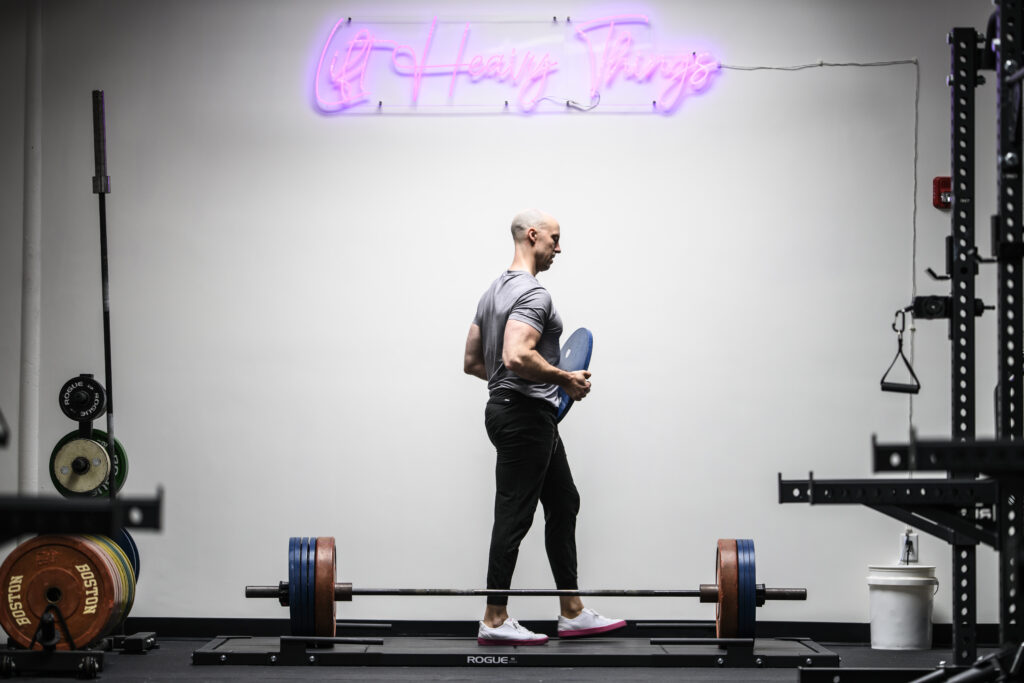
I wonder what would have happened if I named my place Toned Tony’s Palace of Techno and Tickle Fights?
7. If you are going to specialize in one thing, you should aim to be the best at it.
TG: Again, not much I need to add here as it speaks for itself.
There was a time at CSP when we were reticent to be accepted as the “baseball facility.” We were scared that if we did so we’d be leaving other business on the table.
We were wrong.
Thankfully, we (namely, Eric) saw that there was an underserved population out there and we took it upon ourselves to be THE guys to train baseball players.
I’d caution you to think you have to be a jack of all trades. Strive to be the best at one thing and I can almost guarantee you’ll crush.
So, whether you want to specialize in training certain athletes, powerlifters, fat-loss clients, postpartum, or bomb sniffing dolphins…own it.
8. Some days owning a business is awful.
TG: Makes me think of THIS post by Pete Dupuis on “hidden” costs to opening a fitness facility.
Owning a gym can be frustrating, tiring, stressful, and altogether a cornucopia of clusterfuckery. A valuable lesson I learned though, is to not let any of that affect your ability to provide a welcoming and productive experience to your clients and athletes.
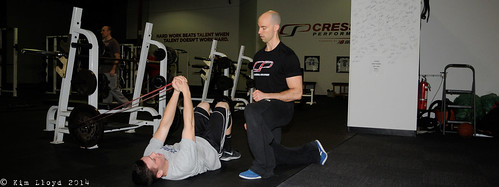
You still need to be able to shut all that out, smile, and go coach.
9. Some people are just jerks.
TG: Oh man, this could be a blog post on its own.
You learn to roll with the punches. My wife, a psychologist, is always quick to point out that most of the time when someone acts rudely or uncouth it rarely has anything to do with you as a person.
She’s a doctor and gives people the benefit of the doubt. I just point out they’re likely an insatiable a-hole.
“It’s too cold, it’s too hot, I don’t want to do this, I hate this exercise, the music sucks, I feel fat, it’s Thursday, blah blah blah.”
The beauty about owning your own spot is that you don’t have to take them on as a client, or, worse case (and this RARELY happens), you fire them.
10. If potential clients say things like ” it’s too much money” or ” do you have anything cheaper” they are most likely going to be a pain in the butt. It’s ok to say no.
TG: All I’ll say here is that I wrote an article on why I don’t think it’s a good idea to discount your rates or offer free sessions HERE.
This Isn’t It
I think this post is long enough and we’re at a good point where we can stop and take a few breaths.
I’ll post points 11-20 next week.

