This page may contain affiliate links — they are marked with a *. Making a purchase via my affiliate means I receive a small share of the sale.
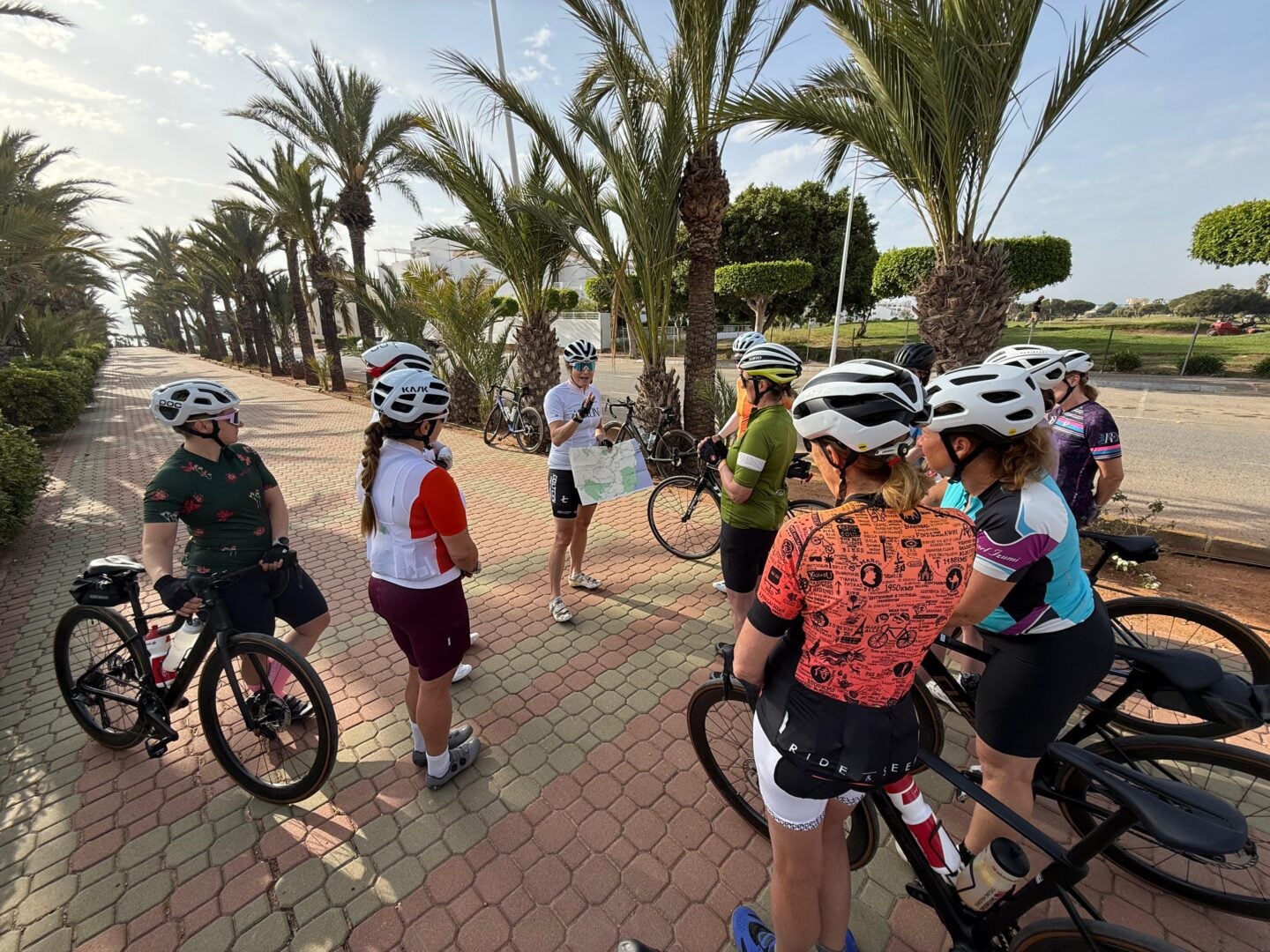
Back in April 2026, I spent about 10 days in Mojácar, Spain, hosting a 7 day / night women’s cycling retreat.
Now, before anyone imagines I spent the week pedalling around in the sunshine, drinking coffee and taking photos of the sea, let me stop you right there. You couldn’t be more wrong.
Don’t get me wrong, there was plenty of sunshine. The roads were beautiful, the food was excellent and watching women achieve things they didn’t think they were capable of never gets old.
But what struck me most about the week wasn’t the riding itself.
It was everything happening around it.
Having spent years attending cycling events, leading rides, coaching and working within the cycling industry, I thought I had a pretty good understanding of what goes into creating a great cycling experience.
Then I spent a week seeing a retreat from the other side.
Whilst riders were busy climbing mountains, conquering fears and making new friends over coffee stops, I got a front-row seat to all the things that happen behind the scenes to make those moments possible.
Some things confirmed what I already thought, whilst other things surprised me completely. So I figured I’d share some of the biggest lessons I took away from the week.
Riders Don’t Need Every Minute Planned
Shortly before arriving in Mojácar (i.e days), the full retreat schedule was shared with me. I did think it looked good on paper, but I also did have reservations about the amount of time that was scheduled for a ‘retreat’.
There were rides, workshops, yoga sessions, talks, social dinners and plenty of opportunities to learn something new. Individually, every activity had value.
What I was concerned about was what all those activities looked like when stacked together.
One day in particular highlighted this perfectly. Riders spent most of the day out on the bike before returning to the hotel at around 5.30pm. Yoga was scheduled an hour later and an evening talk followed after dinner.
By the time everyone had showered, eaten and sat down for five minutes, most people were completely done. Only a handful attended yoga and nobody turned up for the evening talk.
At first glance, you might think that’s a problem. I actually think it’s the opposite. I think it’s a reminder that people book cycling retreats primarily to ride their bikes. Everything else is a bonus.
By the end of the week, some of the most valuable moments weren’t workshops or organised activities at all. They were the chats by the pool, lingering over breakfast or sitting around after dinner talking nonsense. Or dancing together on the final night!
If I was planning a retreat tomorrow, I’d be much less worried about filling every gap in the schedule and much more focused on creating space for those moments to happen naturally.
Ability Groups Are Much Harder Than They Look
Before the retreat started, I’d probably have said that splitting riders into ability groups was one of the easier parts of organising a week away.
You work out who’s quicker, who’s more relaxed, divide everyone up and off you go.
Simple, right? Not quite.
What became obvious very quickly is that cycling ability isn’t just about speed. Some riders are brilliant climbers but nervous descenders.
Some are physically strong but lack confidence riding in groups. Some are perfectly capable of riding with a faster group but don’t believe they belong there.
One thing that really stood out to me was that riders who had been categorised into the “slower” group consistently averaged over 21km/h throughout the week.
That’s hardly hanging around.
Yet some of those same riders still worried about holding people up. And still felt like they needed to apologise for their pace. They even questioned whether they should be there at all.
It reminded me that confidence and ability are often two completely different things.
As ride leaders, guides and organisers, I think we need to be really careful about the language we use because labels stick. Once someone starts seeing themselves as the slow rider, beginner rider or weak rider, it can be difficult to shake.
And that’s a shame because many of the women I met were capable of far more than they gave themselves credit for.
Community Doesn’t Just Magically Happen
One of the things I love most about women’s cycling is how quickly complete strangers can become friends.
At the start of the week there were riders arriving from different countries, travelling on their own and nervously introducing themselves over dinner.
By the end of the week they were sharing photos, swapping phone numbers and planning future rides together.
From the outside, that can look effortless. But I don’t think community happens by accident.
A lot of the work that goes into creating a good retreat isn’t actually about the bike riding at all.
It’s noticing who’s sitting quietly at the end of the table. It’s introducing people who have something in common. It’s checking in with the rider who seems a bit nervous.
It’s making sure nobody feels left out. It’s creating an environment where people feel comfortable enough to be themselves.
One thing I’ve learned through years of coaching and leading rides is that people rarely remember exactly what you said.
They remember how you made them feel.
The same applies to retreats. People might forget the details of a route or the elevation profile of a particular climb, but they’ll remember whether they felt welcomed, included and supported.
The Support Vehicle Isn’t The Easy Job
I suspect most people imagine the support vehicle role involves sitting in a van, drinking coffee and occasionally handing out snacks. If only.
The support vehicle quickly becomes the hub for everything; water stops, mechanical issues, lunch coordination, route changes, checking on riders, managing timings, communicating between groups, problem solving and making sure everyone is where they’re supposed to be.
And, of course, trying to predict problems before they become actual problems.
The funny thing is that when everything runs smoothly, nobody really notices. Which is exactly how it should be. Good support often looks invisible.
But after spending time in that role, I came away with a huge appreciation for the amount of work that happens behind the scenes to create an experience that feels seamless for riders.
Social Media Is Harder Than People Think
This one deserves its own blog post entirely. People often assume social media content should be easy at a retreat.
You’ve got beautiful roads, beautiful scenery and a group of cyclists doing interesting things. What more could you want or need? What could possibly go wrong?
The challenge is that guests are paying for an experience, not signing up to become content creators.
Some people love having a camera pointed at them. Others don’t.
Some riders are delighted to feature on Instagram. Others would rather stay completely offline.
And that’s before you even consider the practical side of things.
It’s surprisingly difficult to capture content whilst simultaneously hosting, supporting riders, coordinating logistics and being fully present in the experience.
Personally, some of my favourite moments from the week weren’t captured at all. They were the conversations, confidence breakthroughs and little wins that happened unexpectedly.
The moments that make a retreat memorable often aren’t the ones you planned to photograph.
Flexibility Beats Perfection Every Time
Like most things in life, retreats rarely go exactly to plan. The weather doesn’t care about your carefully prepared schedule. Mechanical issues don’t check the itinerary first.
People get tired, especially later on in the week and plans change.
Towards the end of the week, poor weather meant the original ride plan no longer made much sense. Instead of forcing it, the schedule adapted.
Yoga was brought forward and spa access was offered.
A smaller ride was organised for those who still wanted to get out on the bike.
And honestly? It worked really well.
One of my biggest takeaways from the week was that people don’t remember whether every activity happened exactly as advertised. They remember how the experience felt.
Sometimes the best thing an organiser can do is let go of the plan and respond to what’s actually happening in front of them.
What I’d Do Differently Next Time
Every event teaches you something.
If I were planning a cycling retreat tomorrow, there are a few things I’d definitely consider.
I’d include a short orientation ride on day one so riders could get familiar with their hire bikes, the roads and each other before tackling bigger routes.
I’d run a group riding skills session early in the week, particularly for riders who are newer to riding in groups.
I’d build more recovery time into the schedule and resist the temptation to fill every available hour.
I’d look carefully at how groups are split and recognise that confidence is often just as important as fitness.
And I’d probably schedule dinner a little earlier because hungry cyclists are less sociable.
Final Thoughts
Despite all the logistics, planning, schedules and moving parts, the thing I’ll remember most isn’t a particular route or climb. It’s the people.
It’s watching women ride roads they never thought they’d ride.
It’s seeing confidence grow over the course of a week.
It’s hearing someone say, “I nearly didn’t come.”
Because that’s the real magic of cycling retreats.
The cycling is important, of course.
But it’s rarely the thing people take home with them.
The friendships, confidence and memories tend to last much longer than any route file ever will.
If you’ve ever been on a cycling retreat, what’s the one thing organisers got right?
And if you’re dreaming of hosting one yourself, what’s the thing that worries you most?
Elle

