This page may contain affiliate links — they are marked with a *. Making a purchase via my affiliate means I receive a small share of the sale.
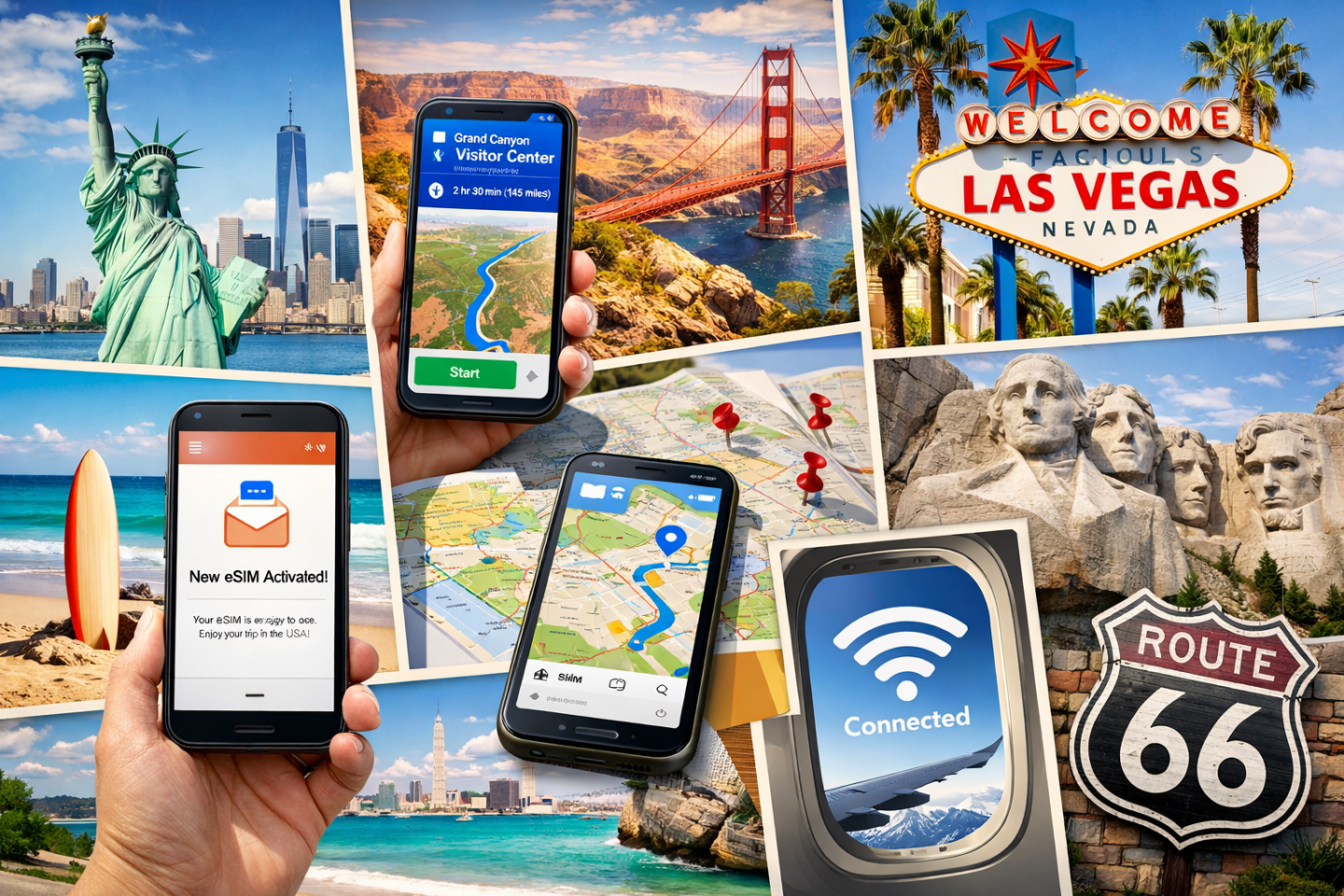
First-time trips across America feel exciting, then a little overwhelming. Distances are huge, cities move fast, and plans change with little warning. Clear communication keeps the trip smooth, from landing day through the last stop.
Mobile connectivity sits at the centre of that experience. An eSIM is a digital SIM that can be activated without inserting a physical card, and many phones support it as a built-in option.
1) Fast Setup that Supports Communication
Airport Wi-Fi can be slow or crowded. A ready USA eSIM profile allows a phone to connect to cellular data shortly after landing, which supports immediate access to travel emails, hotel details, and ride apps. Apple describes eSIM as an industry-standard digital SIM that removes the need for a physical card.
The FCC also explains that eSIM is embedded in the device, which clarifies how the digital setup takes place without visiting a store. Digital activation reduces waiting time at airport kiosks and eliminates the need to handle small SIM trays. Early connectivity ensures smoother airport exits and faster coordination with transport services.
2) Reliable Data for Messaging Apps and Email Across Busy Cities
Messaging apps, email, and shared itinerary links depend on stable internet access. eSIM plans provide a direct cellular connection that reduces reliance on public networks. This matters in downtown areas where Wi-Fi sign-ins and weak signals can slow basic coordination.
- Instant access to messaging platforms for group coordination
- Real-time email updates for bookings, tickets, and schedule changes
- Secure sharing of live locations during meetups or excursions
- Smooth access to cloud-stored travel documents and confirmations
3) Clear Plan Pricing that Reduces Surprise Costs
International roaming charges can grow quickly, especially with navigation, photo uploads, and constant chats. Travelers who choose an eSIM plan get clearer cost expectations through prepaid data allowances and defined validity periods. The FCC notes that devices may support both SIM and eSIM, which can expand options while abroad.
Transparent pricing structures help travelers track usage more accurately throughout the trip. Defined data packages reduce billing uncertainty and support better budget management. Predictable costs keep communication steady without the stress of unexpected fees.
4) Simple Switching Between Lines for Work and Personal Coordination
A second line helps separate travel logistics from personal messages. Many devices store multiple profiles, making it easier to switch plans without handling tiny cards. This becomes useful during multi-city itineraries that require frequent confirmations, check-ins, and time-sensitive updates. A USA eSIM can sit alongside a home line, which keeps two-way contact flexible during the trip.
Best moments to use a second line
- Flight delays and gate changes that require quick rebooking confirmations
- Hotel check-ins that need instant message access for late arrivals
- Group trips where location sharing prevents missed meet-ups
5) Better Communication During Road Trips
America rewards road trips, but long highways can reduce dependable public Wi-Fi access. Cellular data supports live route updates, fuel stop searches, and quick check-ins with family or travel companions. Remote SIM provisioning is part of the GSMA eSIM specification, which supports secure profile management over the air.
That foundation helps explain why connectivity can remain steady without a store visit. This digital framework supports stable connectivity without visiting a retail store. Continuous access to maps and travel apps makes long-distance driving more efficient and less stressful.
6) Safer Use of Digital Services
Public hotspots can expose accounts to risk if basic precautions are missed. Cellular data reduces the need to sign into open networks for routine tasks like messaging, map checks, and payment app access.
The FCC highlights eSIM as built into the phone, which supports the shift away from removable SIM handling. Stronger habits around connectivity help protect communications that include tickets, confirmations, and personal details.
Smart habits that keep communication secure
- Turn off auto-join for public Wi-Fi networks in phone settings
- Use app-based verification methods where available for key accounts
- Save key addresses and bookings offline as a backup plan
7) Practical Support for Short Stays, Multi-stop Itineraries
Trips rarely stay perfectly on schedule. Weather changes, event timing, and transport issues can require rapid reroutes. eSIM access supports quick coordination for ride pickups, restaurant reservations, and last-minute ticket changes. Apple outlines several activation methods, such as carrier activation or QR-based setup, which can streamline plan access for compatible devices.
An eSIM keeps communication tools consistent across airports, cities, and long routes. The right plan supports messaging apps, email access, and real-time coordination without relying on unstable Wi-Fi. A USA eSIM helps keep the trip organised, connected, and calm. Communication stays simple when connectivity stays consistent. America feels easier to explore when connection gaps stop stealing time.

